Authentic Happiness Martin E P Seligman Pdf Writer
The appeal of what I write comes from the fact that it. Whereas Positive Psychology 1.0 was focused on “Authentic Happiness” (the title of Seligman's last book), Positive. “The goal of positive psychology in well-being theory. Is to increase the amount of *flourishing* in your own life and on the planet.” ~ Martin Seligman. Do you want more from your life? More happiness? Better health? Deeper relationships? Increased productivity? What if I told you that just one thing can help you in.
Martin Seligman Born ( 1942-08-12) August 12, 1942 (age 75) Other names Marty Alma mater () () Known for Scientific career Fields Psychology Institutions (Zellerbach Family Professor of Psychology) Martin E. ' Marty' Seligman (; born August 12, 1942) is an American, educator, and author of. Since the late 1990s, Seligman has been an avid promoter within the scientific community for the field of. His theory of is popular among scientific and clinical psychologists.
A survey, published in 2002, ranked Seligman as the 31st most cited psychologist of the 20th century. Seligman is the Zellerbach Family Professor of Psychology in the 's Department of Psychology. He was previously the Director of the Clinical Training Program in the department, and earlier taught. He is the director of the university's Positive Psychology Center.

Seligman was elected President of the for 1998. He is the founding editor-in-chief of (the APA electronic journal) and is on the board of advisers of magazine. Seligman has written about topics in books such as The Optimistic Child, Child's Play, Learned Optimism, and Authentic Happiness. His most recent book, Flourish, was published in 2011. Contents • • • • • • • • • • Early life and education [ ] Seligman was born in. He was educated at a public school and. He earned a bachelor's degree in philosophy at in 1964, graduating Summa Cum Laude.
Seligman turned down a scholarship to study analytic philosophy at Oxford University, or animal experimental psychology at the University of Pennsylvania and accepted an offer to attend the University of Pennsylvania to study psychology. He earned his Ph.D. In psychology at University of Pennsylvania in 1967.
On June 2, 1989 Seligman received an from the Faculty of Social Sciences at, Learned helplessness [ ]. Main article: Seligman's foundational experiments and theory of 'learned helplessness' began at University of Pennsylvania in 1967, as an extension of his interest in. Quite by accident, Seligman and colleagues discovered that the experimental conditioning protocol they used with dogs led to behaviors which were unexpected, in that under the experimental conditions, the recently conditioned dogs did not respond to opportunities to learn to escape from an unpleasant situation. Seligman developed the theory further, finding learned helplessness to be a psychological condition in which a human being or an animal has learned to act or behave helplessly in a particular situation — usually after experiencing some inability to avoid an adverse situation — even when it actually has the power to change its unpleasant or even harmful circumstance.
Seligman saw a similarity with severely depressed patients, and argued that clinical depression and related result in part from a perceived absence of control over the outcome of a situation. In later years, alongside, Seligman reformulated his theory of learned helplessness to include. Enhanced interrogation controversy [ ] was involved in the development of. Mitchell attended a meeting at Seligman's home regarding the and the psychology of capitulation in December 2001.
Mitchell also attended a three-hour talk from Seligman sponsored by the on learned helplessness and torture resistance at in May 2002. The stated that the enhanced interrogation techniques were based on the theory of learned helplessness. Seligman has stated that his involvement does not extend beyond those two events, he does not support torture, and he is grieved and horrified that good science may have been used for such a bad and dubious purpose as torture. Positive psychology [ ] Seligman worked with to create what they describe as a 'positive' counterpart to the ( DSM). While the DSM focuses on what can go wrong, is designed to look at what can go right. In their research they looked across cultures and across millennia to attempt to distill a manageable list of virtues that have been highly valued from ancient China and India, through Greece and Rome, to contemporary Western cultures. Their list includes six character strengths: /knowledge,,,,, and.
Each of these has three to five sub-entries; for instance, temperance includes forgiveness, humility, prudence, and self-regulation. The authors do not believe that there is a hierarchy for the six virtues; no one is more fundamental than or a precursor to the others.
In July 2011, Seligman encouraged to look into well-being as well as financial wealth in ways of assessing the prosperity of a nation. On July 6, 2011, Seligman appeared on and was interviewed by about his ideas and his interest in the concept of well-being.
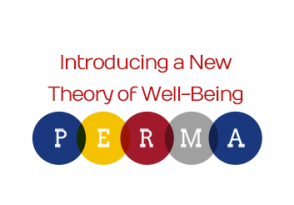
PERMA [ ] In his latest book, Flourish, Seligman articulated an account of how he measures well-being, and titled this work, 'Well-Being Theory'. He concludes that there are five elements to 'well-being', which fall under the PERMA: • Positive emotion — Can only be assessed subjectively • Engagement — Like positive emotion, can only be measured through subjective means.
It is presence of a flow state • Relationships — The presence of friends, family, intimacy, or • Meaning — Belonging to and serving something bigger than one's self • Achievement — Accomplishment that is pursued even when it brings no positive emotion, no meaning, and nothing in the way of positive relationships. From Martin Seligmans book: 'Each element of well-being must itself have three properties to count as an element: • It contributes to well-being. • Many people pursue it for its own sake, not merely to get any of the other elements. • It is defined and measured independently of the other elements.' These theories have not been empirically validated. MAPP program [ ] The Master of Applied Positive Psychology (MAPP) program at the University of Pennsylvania was established under the leadership of Seligman as the first educational initiative of the Positive Psychology Center in 2003.
Personal life [ ] Seligman plays and finished second in the 1998 installment of one of the three major North American pair championships, the, as well as having won over 50 regional championships. Seligman has seven children, four grandchildren, and two dogs. He and his second wife, Mandy, live in a house that was once occupied. They have home-schooled five of their seven children. Seligman was inspired by the work of the psychiatrist at the University of Pennsylvania in refining his own cognitive techniques and exercises. Publications [ ]. Main article: • — (1975).
Helplessness: On Depression, Development, and Death. San Francisco: W.H.
(Paperback reprint edition, W.H. Freeman, 1992, ) • — (1991).. New York: Knopf.. (Paperback reprint edition, Penguin Books, 1998; reissue edition, Free Press, 1998) • — (1993). What You Can Change and What You Can't: The Complete Guide to Successful Self-Improvement.
New York: Knopf.. (Paperback reprint edition, Ballantine Books, 1995, ) • — (1996).. New York: Houghton Mifflin.. (Paperback edition, Harper Paperbacks, 1996, ) • — (2002).. New York: Free Press.. (Paperback edition, Free Press, 2004, ) • — (Spring 2004)... 133 (2): 80–87..
•; Seligman, Martin E.P. Oxford: Oxford University Press.. New York: Free Press.. References [ ]. • ^ 2015-07-03 at the.,. • Bower, Gordon H. Academic Press, Harcourt Brace Jovanovich.
'The most popular theoretical interpretation of the learned helplessness phenomenon to date is that of Seligman (1975) and Maier and Seligman (1976).' • Haggbloom, Steven J.; Warnick, Jason E.; Jones, Vinessa K.; Yarbrough, Gary L.; Russell, Tenea M.; Borecky, Chris M.; McGahhey, Reagan; et al. Review of General Psychology. 6 (2): 139–152..
CS1 maint: Explicit use of et al. American Psychological Association. Uppsala University, Sweden. • Seligman, M.E.P.; Maier, S.F. 'Failure to escape traumatic shock'. Journal of Experimental Psychology. 74 (1): 1–9...; Overmier, J.B.; Seligman, M.E.P.
'Effects of inescapable shock upon subsequent escape and avoidance responding'. Journal of Comparative and Physiological Psychology. 63 (1): 28–33... • Seligman, M.E.P. Helplessness: On Depression, Development, and Death.
San Francisco: W.H. • Abramson, L.Y.; Seligman, M.E.P.; Teasdale, JD (1978). 'Learned helplessness in humans: Critique and reformulation'. Journal of Abnormal Psychology. 87 (1): 49–74... • Dilanian, Ken (6 March 2016).. Huffington Post.
Archived from the original on 6 March 2016. Retrieved 2 April 2017.
CS1 maint: BOT: original-url status unknown () • Shane, Scott (11 August 2009).. The New York Times. Retrieved 2 April 2017. • Melechi, Antonio (29 September 2016)..
Times Higher Education. • Seligman, Martin.. Voltaire Network. Retrieved 2 April 2017. • Horton, Scott (14 July 2008)... Retrieved 2009-02-04.
Seligman said his talk was focused on how to help U.S. Soldiers resist torture — not on how to breakdown resistance in detainees. Mitchell has denied that these theories guided his and the CIA's use • Seligman, Martin (18 March 2010).. Huffington Post. • Shaw, Tamsin; Seligman, Martin..
The New York Review of Books. • Linley, P.A.; Maltby, J.; Wood, A.M.; Joseph, S.; Harrington, S.; Peterson, C.; Park, N.; Seligman, M.E.P. Personality and Individual Differences. 43 (2): 341–351..
• ^ Seligman, Martin (2011). New York: Free Press. University of Pennsylvania. Retrieved 10 April 2014. • Francis, Henry G., Editor-in-Chief;; Francis, Dorthy A., Editor, Sixth Edition (2001). Memphis, TN: American Contract Bridge League. CS1 maint: Extra text: authors list () • Burling, Stacey (30 May 2010)..
The Inquirer - Interstate General Media. Retrieved 1 April 2014.
• Hirtz, Rob (January 1999).. The Pennsylvania Gazette. The University of Pennsylvania. External links [ ] •, Seligman's homepage at University of Pennsylvania •, an article wherein Seligman speaks extensively on the topic of •, a website devoted to positive psychology. Martin Seligman is director of the Positive Psychology Center of the University of Pennsylvania.
• established by Seligman • at the University of Pennsylvania • • University of Pennsylvania's page on program.
A national bestseller, Authentic Happiness launched the revolutionary new science of Positive Psychology—and sparked a coast-to-coast debate on the nature of real happiness. According to esteemed psychologist and bestselling author Martin Seligman, happiness is not the result of good genes or luck.
Real, lasting happiness comes from focusing on one’s personal strengths rath A national bestseller, Authentic Happiness launched the revolutionary new science of Positive Psychology—and sparked a coast-to-coast debate on the nature of real happiness. According to esteemed psychologist and bestselling author Martin Seligman, happiness is not the result of good genes or luck.
Real, lasting happiness comes from focusing on one’s personal strengths rather than weaknesses—and working with them to improve all aspects of one’s life. Using practical exercises, brief tests, and a dynamic website program, Seligman shows readers how to identify their highest virtues and use them in ways they haven’t yet considered. Accessible and proven, Authentic Happiness is the most powerful work of popular psychology in years. پیشنهاد می شه به: اونایی که کارشون عذاب روحشون هست و می خوان بدونن چه طور می تونن از همون کار لذت ببرن اونایی که حس می کنن به اندازه کافی خوشحال نیستن و می خوان لذت بیشتری از زندگی ببرن محتوا و بررسی کتاب مارتین سالیگمن نوسنده کتاب، بنیان گذار روانشناسی مثبت گرا هست و ازین جهت یه جورایی دنیای روانشاسی رو چهره جدیدی بخشیده. اما چرا؟ خیلی جالب نویسنده توضیح می ده که از پیدایش روانشناسی، همیشه سعی بر مقابله و درمان بیماری های مختلف روانی بوده و این علم غالبا با مشکلات و مسائل منفی سر و کارداشته همیشه ت پیشنهاد می شه به: اونایی که کارشون عذاب روحشون هست و می خوان بدونن چه طور می تونن از همون کار لذت ببرن اونایی که حس می کنن به اندازه کافی خوشحال نیستن و می خوان لذت بیشتری از زندگی ببرن محتوا و بررسی کتاب مارتین سالیگمن نوسنده کتاب، بنیان گذار روانشناسی مثبت گرا هست و ازین جهت یه جورایی دنیای روانشاسی رو چهره جدیدی بخشیده. اما چرا؟ خیلی جالب نویسنده توضیح می ده که از پیدایش روانشناسی، همیشه سعی بر مقابله و درمان بیماری های مختلف روانی بوده و این علم غالبا با مشکلات و مسائل منفی سر و کارداشته همیشه تا دهه نود که یه عده به این فکر می افتن و به جای تمرکز بر روی 'چه طور بیمار نبود و چه طور بیماری را درمان کردن' نگاهشون رو به 'چه طور می توان خوشحال و راضی بود' معطوف می کنن. این از روانشناسی مثبت گرا بخش اول کتاب مزیتای خوشحالی رو بررسی می کنه که ماشالله از جذاب جلوه کردن گرفته، تا سلامتی بیشتر، روابط بهتر و عمیق تر و چندین مورد دیگه رو شامل می شه.
به طور کلی احساسات مثبت یه شخص که روی زندگی و حال فعلیش تاثیر می ذاره در سه سطح بررسی می شه توی این کتاب: احساسات مثبت مروبط به گذشته، حال و آینده آینده احساساتی مانند خوش بینی، اعتماد، ایمان. گذشته احساساتی شامل رضایت خاطر، غرور و متنات، و احساسات مثبت مربوط به زمان حال، لذت، شور و شعف، آرامش و مهمتر از همه وضعیتی با نام 'جریان' یا فلو رو در بر می گیرند. کتاب پر هست از تستای مختلف روان شناختی، از تست خوش بینی گرفته تا امید به آینده و مهمترین دست آورد کتاب که می تونه بالقوه زندگی رو متحول کنه تست قدرت های نهفته در وجود هر شخص هست. شاهکار کتاب کار بزرگی که دکتر سالیگمن و همکارانش انجام داده مطالعه جامع توصیه های کلیه آیین ها و مذاهب از بودا و کنفوسیوس ارستو گرفته تا اسلام هست و یک هدف رو ازین مطالعات دنبال می کردن و اون هم استخراج فضیلت های اخلاقی که فراگیر هستند. یعنی ویژگهایی شخصیتی که شخص با مصرف کردن اراده زیادی در خودش ایجاد می کنه، مثل خرد یا شجاعت.
اما چرا؟ طبق آخرین یافته ها برای داشتن خوشحالی اصیل و ماندگار، رشد دادن این فضیلت ها درون خود بهترین راه هست. The belief that we can rely on shortcuts to happiness, joy, rapture, comfort, and ecstasy, rather than be entitled to these feelings by the exercise of personal strengths and virtues, leads to legions of people who in the middle of great wealth are starving spiritually.
Positive emotion alienated from the exercise of character leads to emptiness, to inauthenticity, and depression نویسندگان در نهایت، شش فضیلتی رو که فراگیر هستن و بین همه آیین و مذاهب مشترکند به صورت زیر معرفی می کنن: 1. Wisdom and knowledge 2. Love and humanity 4. Temperance 6. Spirituality مهمتر اینکه هر کدوم ازین فضیلت ها چند زیر شاخه دارن که بهشون می گن توانایی یا قدرت.
یک نوع ویژگی شخصیتی نهفته در ژن ما که هر کس بالقوه ازش برخوردار هست و برای اینکه شخص بتونه صاحب این فضیلت ها باشه باید قدرت هایی ازون فضیلت رو که درونش نهفته داره بشناسه و به کار بگیره. (یک مورد کافیه، نیاز به داشتن کل زیرمجموعه قدرت ها از یک فضیلت نیست) مثلا زیر شاخه های مورد اول از قرار زیر هستن: 1. Curiosity II. Love of learning III.
Judgement IV. Social Intelligence VI. Perspective هر شخصی ممکنه یک یا چند مورد ازین قدرت ها رو درونش داشته باشه که یا می دونه یا نمی دونه.
اما شناختن و به کار گرفتن این قدرت ها چه مزایایی دارن: فرض کنید شما قدرت 'عشق یادگیری' رو داشته باشید درونتون. برای اینکه زندگی شاداب و جذاب تری داشته باشید، باید فعالیت هایی رو در زندگی به کار بگیرید که ازین قدرت ها استفاده کنه. مثلا کسی با قدرت 'عشق یادگیری' شاید از سینما رفتن لذتی نبره، ولی اگر در یک سمینار آموزشی شرکت کنه نه تنها لذت بیشتری می بره و اوقات خوشی رو سپری می کنه، بلکه بعد از اون، علاوه بر یک حس خوب، یک شخصیت بهتر ازش به جا می مونه.
پیام کتاب این هست که این قدرت ها رو بشناسیم و هر شغلی که داریم، سعی کنیم به نحوی انجامش بدیم که با این قدرت های ما سر و کار داشته باشه. دراین صورت یک شغل خسته کننده می تونه تبیدل بشه به یک کار با معنا و جذاب. فرمول خوشحالی روانشناس ها به یک فرمولی از خوشحالی رسیدن که به صورت زیر هست: H (happiness) = S + C + V S: (Set point) این متغیر، میزان خوشحالی و رضایت هر فرد هست که توسط ژنتیکش مشخص شده. جالب این هست که چه اتفاق فاجعه بار (مثل از دست دادن یکی از اعضای بدن) چه اتفاق بسیار خوشحال کننده (مثل برنده شدن در لاتاری) برای فردی بیفته، بعد از مدتی سطح رضایت و خوشحالیش به این مقدار اولیه بر می گرده. C: (Circumstances) این مورد شرایط خارجی هست که در خوشحالی فرد می تونه تاثیر گذاره و نا گفته نماند حداکثر می تونه خوشحالی فرد رو تا پانزده درصد افزایش بده که شامل مواردی می شه مثل: 1.
یک ازدواج خوب 2. داشتن دایره اجتماعی غنی 3.
کم کردن مسیر کار تا منزل 4. V (Voluntary Actions): اما مهمرین متغیر این معادله که بیشرین تاثیر رو می تونه داشته در خوشحالی فرد، اعمالی هست که به طور اختیاری می تونیم انجام بدیم که اصلی ترین کار ممکن برای به حداکثر رسوندن این متغیر به کار گرفتن اون قدرت هایی هست که در بالا گفتم. جمع بندی کتاب بعضی مواقع به بیان مسائل خشک و غیر جذاب شخصی نویسنده می پردازه و بزرگترین نقدی که می تونم داشته باشم به کتاب اینه که علی رغم پیام بسیار خوب و کار ارزشمندش در خصوص قدرت های شخصی، به جز ارائه چند مورد کوتاه، هیچ توضیحی در خصوص راه های به کار گیریشون نمی ده.
مثلا کسی که قدرت دوراندیشی رو داره، چه طور می تونه ازش استفاده کنه و بهره ببره. در کل، با توجه به رسالت بزرگی که این کتاب سعی در بر عهده گرفتنش داره یعنی باز کردن دید مردم برای به کار گیری قدرت های شخصیشون جهت کامیابی، کتاب بسیار بسیار با ارزشمندی هست. علاوه بر این راه حل ها و تکنیک های زیادی رو هم برای کسانی که درگیر اتفاقات بد گذشته هستن یا نسبت به آینده بدبین هستن ارائه می کنه که خود من قبلا تجربه استفاده از یک سری تکنیک هاش رو داشتم و بسیار بسیار موثر و مفید هستند و قطعا یک بار خوندن این کتاب رو برای کسانی که دنبال زندگی با آرامش و شادی بیشتر هستن پیشنهاد می کنم. تست هایی رو که در بالا گفتم رو می تونید در سایت زیر انجام بدین و قدرت های شخصیتون رو پیدا کنید: این هم لینک دریافت کتاب. So many self-help books, questionnaires, and popular psychology books talk about what’s wrong with our lives and how to make the bad bits better. Seligman asks us to look instead at what’s good, and learn to turn good into excellent, making this a book on mental wellness, rather than mental illness.
It’s a refreshing change. Wouldn’t you rather feel more happy instead of less miserable? But this isn’t just a question of looking at half-filled cups when they might be half-empty.
Simpl So many self-help books, questionnaires, and popular psychology books talk about what’s wrong with our lives and how to make the bad bits better. Seligman asks us to look instead at what’s good, and learn to turn good into excellent, making this a book on mental wellness, rather than mental illness. It’s a refreshing change. Wouldn’t you rather feel more happy instead of less miserable?
But this isn’t just a question of looking at half-filled cups when they might be half-empty. Simple questionnaires (with more complicated versions online) invite the reader to find their own strengths so we can play to them.
And then, in a nice twist on the “So this is who you are” approach, we’re asked to identify which strengths feel natural to us, which feel enlivening. We might be good at leading but feel drained every time we have to lead, making leadership a strength, but not a signature strength. Those final, happy, signature powers become the key to enlivening everyday life. But first, are you happy?
Not just smiling today, but waking up happy, contented, hopeful, optimistic. And what things will make us happy? The author has looked through many cultures to find those things common to most. Again, there’s a twist—he’s not looking for features valued in all; just in most, because there area always exceptions—that’s why they’re called exceptions. Religion becomes something of worth, though the author’s own “religious” beliefs, expounded in a final chapter, might not agree with his readers’. The answer’s not in the details but in the approach. Raise happy children.
Turn your job into something you enjoy (without necessarily changing jobs). Find your strengths and enjoy who you are instead of trying to turn into someone else. And enjoy this book. Disclosure: My sister-in-law lent me a copy of this book then I went out and bought my own. This is a really good book.
It was slow to start, spending pages upon pages talking about the benefits of being happy. Like, duh, just wanting to be happy isn't a good enough reason? I want to be happier because, uh, I'll be happier?
Other than that, good stuff, though. Concrete suggestions backed by psychological study. Summary: - Your past doesn't determine your future. Increase your gratitude. - Assume bad things are temporary and isolated to the particular context in which they occur. This is a really good book. It was slow to start, spending pages upon pages talking about the benefits of being happy.
Like, duh, just wanting to be happy isn't a good enough reason? I want to be happier because, uh, I'll be happier? Other than that, good stuff, though. Concrete suggestions backed by psychological study. Summary: - Your past doesn't determine your future. Increase your gratitude.
- Assume bad things are temporary and isolated to the particular context in which they occur. Assume good things are permanent and pervade every area of your life. Dispute the bad thoughts as needed. - Enjoy pleasures that don't require a lot of effort--savor them and share them-- but more importantly seek out gratifications, things that require effort and produce a sense of accomplishment.
- To make your job meaningful, find a way to use your signature strengths there. Things to remember How to forgive (p. 79): REACH -Recall the hurt as objectively as possible. Try to imagine how it went from the other person's perspective and what they might have been thinking or feeling, with the assumption that they are not evil. -Empathize: try to understand from the other person's point of view. Reasons people hurt others: they feel their survival is threatened; they're afraid, worried, or hurt themselves; something about the situation; carelessness. -Altruistically give forgiveness.
Remember a time when someone forgave you. Rise above the hurt and vengeance. -Commit yourself to forgive and make a record of it, by writing the person a letter, writing in your diary, telling a friend, etc.
-Hold onto forgiveness--every time you think of the hurt, remember that you have forgiven it. My signature strengths (VIA strengths survey quiz starting p. 140, also available on appreciation of beauty, gratitude, optimism, playfulness, and fairness. Hm, why do I love yarn and feel my mind go numb whenever I walk into work? 'There are few stronger predictors of happiness than a close, nurturing, equitable, intimate, lifelong companionship with one's best friend.' (p.187) Well, duh, when you put it that way. 90% accurate predictors of divorce (p.
197): - a harsh startup in a disagreement - criticism of partner, rather than complaints - displays of contempt - hair-trigger defensiveness - lack of validation (particularly stonewalling) - negative body language happy and improving couples (p. 197): - find out each other's plans for the day before parting in the morning - have a low-stress reunion conversation at the end of each work day - demonstrate lots of affection, laced with tenderness and forgiveness - go out on a date once a week - exchange genuine affection and appreciation at least once a day p.199 The more inaccurately idealized the people saw their partners, the more stable the relationship.??? I find this one hard to believe--sounds great until it wears off. 262 good life--using your signature strengths to obtain abundant gratification in the main realms of your life meaningful life--using your signatures strengths and virtues in the service of somehing much larger than yourself full life--experiencing positive emotions about the past and future, savoring positive feelings from teh pleasures, deriving abundant gratification from your signature strengths, adn using these strengths in the service of something larger to obtain meaning. Fascinating book from the man who decided that the psychology of mental illness needed to be paired with research into mental wellness.
Seligman believes there's more to mental good health than the mere abscence of illness or sadness, and has inspired a group of researchers to work with him on creating a new branch of psychology to figure it out. He catalogues the different ways of being happy: about the past, the future and the present. He focuses mostly on present happiness, dividing it into tw Fascinating book from the man who decided that the psychology of mental illness needed to be paired with research into mental wellness.
Arnold Modellbahn Katalog Pdf Editor here. Seligman believes there's more to mental good health than the mere abscence of illness or sadness, and has inspired a group of researchers to work with him on creating a new branch of psychology to figure it out. He catalogues the different ways of being happy: about the past, the future and the present. He focuses mostly on present happiness, dividing it into two categories: pleasures and gratifications. Pleasures can become dulled over time (even caffiene addicts can take their morning coffee for granted), so he gives tips on how to make sure you appreciate them fully. Gratifications are things that give you a lasting satisfaction in life, and mostly centre around being able to use your strengths and talents to the full. He gives you a way to figure out your strengths, then shows how you can find ways to apply them in your relationships and work, and how to encourage their development in children.
All sections except the last chapter of the book are based on empirical research, which was really interesting to learn about. The last chapter is his speculation on where positive psychology has the potential to take the human race - I found it a bit too fluffy for my liking, but he's entitled to speculate about where his work is heading and for all I know he'll turn out to be right. I'd known about Seligmman's work for quite some time. I first started taking questionnaires at his website back in 2008. The fact that three years later, I still haven't taken them all, should be a pretty good indicator that I've never been converted to a true believer.
But I do keep coming back, so there are aspects of his work that I find interesting. This book and the test center at his website are really tie-ins to each other. It was because my results kept saying 'for more information, see t I'd known about Seligmman's work for quite some time.
Behringer Usb Audio Driver Free Download there. I first started taking questionnaires at his website back in 2008. The fact that three years later, I still haven't taken them all, should be a pretty good indicator that I've never been converted to a true believer. But I do keep coming back, so there are aspects of his work that I find interesting.
This book and the test center at his website are really tie-ins to each other. It was because my results kept saying 'for more information, see the book,' that I finally read the book. And while the book includes at least basic versions of all the tests, the book constantly refers you to the website to take the tests there. The website is nice in that it keeps track of all your results for you and records when you took each test.
I should back up. The intention of this book is to be a sort of handbook to the relatively new science of positive psychology. Of course, as you may have gathered from my review so far, it comes across as more of a guidebook to the current tests and surveys of the positive psychology movement.
Which is, I suppose, a good place to start from, but I found myself wishing Seligman went a little further with it. Instead, each section introduced the concept behind some test, talked about why it was important, gave the test, discussed why certain answers were indicators of important behaviors/attitudes, and discussed the results.
A few tips were given for 'improvement' in that category, and then on to the next test! Okay, so really, that only comprises the first half of the book. In the second half, Seligman deals with the concept of 'signature strengths,' which I am very interested in and was the tipping point for me to seek out the book in the first place. A group of researchers examined many of the cultures and religions of the world and came up with a list of 24 virtues or strengths that had near-universal appreciation. Their theory is, rather than dwelling on the virtues we are weakest in, true gratification and fulfillment comes from arranging our lives in such a way that we are using our signature strengths as much as possible. This idea really appeals to me, and the last section of the book had some lovely suggestions on recognizing and supporting the strengths of our spouse and our children.
There was some lip service given to using your strengths at work, but the 'how' to do this seemed to be left a little vague. The very last section on meaning and purpose was utterly fascinating as it referenced Asimov's 'The Last Question,' and fed directly into the future-focused theology I seem to be building into. Seligman and I have some philosophical differences that I found mildly irritating during a few points of the book, but this theory as a conclusion for the book was a very validating moment that greatly upped the chances that I'll pick up another work by Seligman in the future. The cover of this book seems pretty pathetic; I'll be the first to admit I was put off by it. 'Authentic happiness' from one little book. However, it was recommended to me by a professional therapist, so I bought it. I'm just making my way through the preface, and I'm already pleased.
Who doesn't love a good dig into Freud? Here's a quote I liked: 'Freud's philosophy, as bizarre as it sounds when laid out so starkly, finds its way into daily psychological and psychiatric practice, wherei The cover of this book seems pretty pathetic; I'll be the first to admit I was put off by it. 'Authentic happiness' from one little book. However, it was recommended to me by a professional therapist, so I bought it. I'm just making my way through the preface, and I'm already pleased.
Who doesn't love a good dig into Freud? Here's a quote I liked: 'Freud's philosophy, as bizarre as it sounds when laid out so starkly, finds its way into daily psychological and psychiatric practice, wherein patients scour their pasts for the negative impulses and events that have formed their identities. Thus the competitiveness of Bill Gates is really his desire to outdo his father, and Princess Diana's opposition to land mines was merely the outcome of sublimating her murderous hatred for Prince Charles and the other royals.' Anyway, I'm looking forward to see what Seligman has to say, and I'm interested find out more about the Positive Psychology movement vs.
Traditional psychoanalysis. Is this authentic happiness? JDN 2456177 EDT 13:59. When I started Authentic Happiness, I had the highest hopes—that this might finally be the way out of my depression.
When I finished reading it, I felt even more hopeless and depressed. Now that I've had some time to reflect on it, I just feel ambivalent and disappointed. Seligman promises to offer us a fundamentally new approach to psychology, focused not on curing illness but on supporting flourishing, not on treating depression but on creating Is this authentic happiness? JDN 2456177 EDT 13:59.
When I started Authentic Happiness, I had the highest hopes—that this might finally be the way out of my depression. When I finished reading it, I felt even more hopeless and depressed. Now that I've had some time to reflect on it, I just feel ambivalent and disappointed.
Seligman promises to offer us a fundamentally new approach to psychology, focused not on curing illness but on supporting flourishing, not on treating depression but on creating happiness. He promises to build a foundation for this program based on honest appraisal of personal strengths and a life of virtue. Does not succeed. He does not completely fail, and perhaps he points us in that general direction, but he doesn't get us there. The worst parts are when he tells us the key to happiness lies in self-delusion. He doesn't do this often, but once would be too many.
The delusion he most commonly advocates is what he calls “optimism”; optimism might sound like a good thing, but listen to how Seligman defines it. For Seligman, an optimist believes that good things are always personal, permanent, and pervasive, while bad things are always impersonal, temporary, and local. Of course, this is simply not true. In reality, both good and bad things can be either personal or not, permanent or not, pervasive or not. In fact, I think my depression involves a delusional level of pessimism, believing that bad things are worse than they really are and good things are not as good as they really are. So in that sense, I should be recalibrating my perception. But Seligman doesn't help us to recalibrate to the truth; instead he tells us that higher optimism is always better, even if it makes you into a raving maniac.
One thing I really do try to do is repeat a list of affirmations about good things in my life. But when I do this, one criterion is absolute: They must be true. Without this requirement, the whole enterprise falls apart; we might as well be wireheads. This is not authentic happiness at all, but happiness founded upon lies. Most of the time, Seligman actually seems to appreciate this, and encourages us to focus on our real strengths instead of pretending we have strengths we truly lack. But about once a chapter or so, he slips, and tells us that we should nurture positive illusions. It's weird; for him there doesn't seem to be a big difference between happiness due to good things and happiness due to delusional attitudes.
For me, the difference is absolutely fundamental. It was Seligman's slips that triggered my despair on the train ride home from Chicago. I realize now that it was an overreaction, but this was my thought process: 1. People with positive illusions are happier. Therefore, the only way to be happy is to delude yourself. Therefore, life is awful; anyone who sees life as it truly is will be unhappy. Therefore, life is pointless and we may as well just die.
I'm sure this is not what Seligman intended to say. But at least in that dark moment, it was what I heard. And it is what I still hear, from hedonists on the Internet who literally can't understand why I would rather be honestly sad than delusionally happy, why I would want to live an authentic and virtuous life when I could simply drug myself into bliss. They are, in short, wireheads—or pre-wireheads waiting for the technology to mature. If Seligman truly believes in authentic happiness, he needs to be much more careful to exclude this kind of thinking. He must say, “You should be more optimistic—if you are currently too pessimistic.
You should focus on your strengths more—if you currently focus too much on your weaknesses. You should have more self-esteem—if you are currently self-effacing.” Without that proviso, he comes off as saying that it's just fine to be a wireheaded narcissist. And a lot of people apparently really believe that! I originally read this book for a college course, where we were actually only supposed to read excerpts.
It interested me so much that I read the whole book, but always felt the injustice of being unable to dive as deeply into it as I wanted, since it was my senior year of college, and I was busy with other assignments. This time, I took my time getting through it, stopping and pausing often to think about what I had just read. I love Martin Seligman.
For a little history, he was President of the I originally read this book for a college course, where we were actually only supposed to read excerpts. It interested me so much that I read the whole book, but always felt the injustice of being unable to dive as deeply into it as I wanted, since it was my senior year of college, and I was busy with other assignments. This time, I took my time getting through it, stopping and pausing often to think about what I had just read. I love Martin Seligman.
For a little history, he was President of the American Psychological Association, and began the movement that shifted the focus of psychology from trying to 'heal' the sick to preventing illness from happening. As a recreation therapist, I have to admire and support his work. Professionals have debated for years about the definition of health; does that mean absence of illness, or something more? I would argue that it encompasses more, including an active, fulfilling lifestyle; and Seligman has written this book to help typical people find that kind of a lifestyle, and thus, true 'health'.
But besides my admiration and support of Seligman, I just found this book to be fascinating. It's amazing what can be learned when all of the obscure, genius studies of psychologists are all pooled together. Or maybe I'm just a psychology nerd.
This book provides a detailed and insightful model of all the different contributors to happiness (fulfilment is probably a better word). Best of all, the author offers up a hypothesis as to how to put the knowledge to use!
I would highly recommend this book - even if life is pretty good in general, it may provide that little extra *click* that leads to a Eureka moment. And if life sucks, well, consider this book a checklist of things to work on one at a time. Key Points: 1. There are three diffe This book provides a detailed and insightful model of all the different contributors to happiness (fulfilment is probably a better word).
Best of all, the author offers up a hypothesis as to how to put the knowledge to use! I would highly recommend this book - even if life is pretty good in general, it may provide that little extra *click* that leads to a Eureka moment. And if life sucks, well, consider this book a checklist of things to work on one at a time. Key Points: 1. There are three different kinds of positive emotion: past-related (gratitude, forgiveness), present-related (pleasure = fleeting, gratification = flow state), and future-related (permanence & pervasiveness of optimistic outlook) 2. Your signature strengths come in 24 flavours grouped into six categories that are ubiquitous through time and culture: wisdom/knowledge, courage, love/humanity, justice, temperance, spirituality/transcendence 3. Fulfilment comes from re-crafting your life domains (e.g.
Career, health, love, hobbies) to utilize your signature strengths on a daily basis. My father gave me Dale Carnegie's How to Stop Worrying and Start Living to read as an anxious adolescent. Later I read Norman Vincent Peale.
This book mentions how Norman Vincent Peale's positive thinking grew out of early Protestantism (Methodism) in the United States and the notion of our having a free will to better ourselves (rather than being passive vessels waiting to be filled with grace). The author asks the question as to whether the development of Positive Psychology, the program at th My father gave me Dale Carnegie's How to Stop Worrying and Start Living to read as an anxious adolescent. Later I read Norman Vincent Peale. This book mentions how Norman Vincent Peale's positive thinking grew out of early Protestantism (Methodism) in the United States and the notion of our having a free will to better ourselves (rather than being passive vessels waiting to be filled with grace). The author asks the question as to whether the development of Positive Psychology, the program at the heart of this book, is just positive thinking 'warmed over'.
He argues that Positive Psychology is 'tied to a program of empirical and replicable scientific activity'. Of course it is. (His later comment that social science, no matter how sophisticated, never predicts more than 50 per cent of the variance of anything, rather deflates his argument.) He goes on to say that while positivity is linked in many studies with later health, longevity, sociability and success, the balance of the evidence of many studies suggests that in some situations (such as 'when an airplane pilot is deciding whether to de-ice the wings of *her* airplane') negative thinking leads to more accuracy and in some situations 'we should all be pessimists'. Amen to that. This book was published in 2002 and the author briefly mentions the 9/11 terrorist attacks in his End Notes, calling for prevention of future attacks rather than vengeance which he abhors. The attacks, and the 2008 world economic crisis, must have put the skids under his optimistic belief that we're headed towards nirvana since the evolutionary 'process that selects for more complexity is ultimately aimed at nothing less than omniscience, omnipotence and goodness.' All that being said, it appears the way to 'authentic happiness' (as opposed to inauthentic happiness, you understand) is largely what the early positive thinkers have always told us: count your blessings, express gratitude, find a calling, money won't buy happiness, forgive others who wrong you.
It also helps to have optimism and hope which will cause 'better resistance to depression when bad events strike; better performance at work and better physical health.' Seligman as father of Positive Psychology is a convincing advocate for augmenting the disease model of traditional psychology and for broadening the base of those who understand the benefits of promoting authentic happiness. While most of what he describes does not sound new, the read is worth while as it backs up all those long held beliefs buried in the self help sections of bookshops with solid emperical evidence. I could not help feeling almost validated and clever in recognising some of my Seligman as father of Positive Psychology is a convincing advocate for augmenting the disease model of traditional psychology and for broadening the base of those who understand the benefits of promoting authentic happiness.
While most of what he describes does not sound new, the read is worth while as it backs up all those long held beliefs buried in the self help sections of bookshops with solid emperical evidence. I could not help feeling almost validated and clever in recognising some of my long held held personal beliefs in print, but now backed up by science and research. And isn't that what Positive psychology is all about in the end?
Being able to believe that one's ideas are worth while and valuable, contributing to a model of mental wellness and being a happy an fulfilled person? Not much of his overview of traditional Psychology's history is fresh or new, but Seligman does review the history in a way reminding us of the key role of evolution in our search for personal happiness. It is not so much new information that makes this a good read, but the validation that what the pop psychologists said all along holds more than just a grain of truth. That, and the way Seligman incorporates our understanding of behavioral psychology into a practical way to help our clients and friends to experience authentic joy BEFORE their mental health becomes threatened or comromised isthe real pay load of the book. Seligman adds value to the lives of ordinary people in layman's language. It is an essential education for Everyman. We should teach it at school.
I loved this book. This book helped me to perfect the ability to 'replace negative and all encompassing' thoughts with more neutral and more local thoughts. For example, one could say, 'Everyone hates me.'
But after reading this book, I would be able to replace that with, 'Well, not everyone hates you. A few people, like _____, _______, and _______ still like you. And not only that, do you really care if people hate you because you are holding them accountable at work?' Usually, this would help I loved this book. This book helped me to perfect the ability to 'replace negative and all encompassing' thoughts with more neutral and more local thoughts.
For example, one could say, 'Everyone hates me.' But after reading this book, I would be able to replace that with, 'Well, not everyone hates you. A few people, like _____, _______, and _______ still like you. And not only that, do you really care if people hate you because you are holding them accountable at work?' Usually, this would help me to refocus on my true mission as a supervisor.
And finally, I would add on, 'Anyone can make everyone love them.' But that is not your purpose. Your purpose is to ensure that.'
It helped me a lot after getting wounded from poisoned arrows with great purchase. JV gave me this book, and I will always be grateful. This book resonated with me. Below are a few notes that I made while reading it. 'We find that both the depressed people who walk into our clinic and people need help us by unsolvable problems display passivity, become slower to learn, and are sadder and more anxious than people who are not depressed or are our control subjects.' (Page 22) '10 years into our work on learned helplessness I changed my mind about what was going on in our experiments.
It all stems from some embarrassing findings that This book resonated with me. Below are a few notes that I made while reading it. 'We find that both the depressed people who walk into our clinic and people need help us by unsolvable problems display passivity, become slower to learn, and are sadder and more anxious than people who are not depressed or are our control subjects.' (Page 22) '10 years into our work on learned helplessness I changed my mind about what was going on in our experiments. It all stems from some embarrassing findings that I keep hoping we'll go away. 1 out of 3 never give up, no matter what we do. Moreover, one out of eight is helpless to begin with - it does not take any experience with uncontrollability at all to make them give up.
At first, I try to sweep this under the rug, but after a decade of consistent variability, the time arrives for taking it seriously.' (Page 23) 'I found that teaching 10 year old children the skills of optimistic thinking and action cut their rate of depression in half when they go through puberty.' (Page 27) 'What progress there has been in the prevention of mental illness comes from recognizing and nurturing a set of strengths, competencies and virtues in young people - such as future-mindedness, hope, interpersonal skills, courage, the capacity for flow, faith, and work ethic. The exercise of these strengths ten buffers against the tribulations that put people at risk for mental illness.' (Page 27) From Page 37 we learn that depressed people make more accurate assessment than happy people.
And in Page 38 we find that happy people people make better decisions under most circumstances. In a later chapter we learn that pessimists make better lawyers.
'These 'very happy' people differed markedly from average people and from unhappy people in one principal way: a rich and fulfilling social life. The very happy people spend the least time alone (and the most time socializing), and they were rated highest on good relationships by themselves and by their friends.' (Page 42) Happiness_enduring_level = Set_range + Circumstances + Voluntary_controlled_factors Voluntarily controlled factors are covered in chapters 5, 6, & 7 '. Roughly 50% of almost every personalty trait turns out to be attributable to genetic inheritance.' (Page 47) Chapter 5 Satisfaction About the Past 'Positive emotions can be about the past, the present, or the future.
The positive emotions about the future include optimism, hope, faith and trust. Those about the present include joy, ecstasy, calm, pleasure, and (most importantly) flow; these emotions are what most people usually mean when they casually - but much too narrowly - talk about 'happiness'.
The positive emotions about the past include satisfaction, contentment, fulfillment, pride, and serenity.' (Page 62) In talking about forgiveness: As the saying goes: (Page 80) If you want to be happy For an hour, take a nap. For a day, go fishing. For a month, get married. For a year, get an inheritance. For a lifetime, help someone. 'Shortly after New Year's Day, Seligman does an evaluation taking about half an hour where he evaluates the following areas.
Someone else might have different categories.' (This is Chapter 5 - Satisfaction About the Past) (Page 82) - Love - Profession - Finances - Play - Friends - Health - Generativity - Overall - Trajectory: Evaluate year-to-year changes and their course across a decade. Techniques for increasing optimism about the future (in chapter 6 - optimism about the future) - Adversity: What is the event? - Belief: What negative self talk is going on in my head? - Consequences: What are the consequences I am imagining will happen?
- Disputation: Reorient my thinking by evaluating: Evidence, Alternatives, Implications (decatastrophize), Usefulness (is the belief destructive) - Energization: 'To our surprise, almost every single one of these traditions flung across 3000 years and the entire face of the earth endorsed six virtues: - Wisdom and knowledge - Courage - Love and humanity - Justice - Temperance - Spirituality and transcendence' (Page 132-133) 'Finally comes romantic love - the idealization of another, idealizing their strengths and virtues and downplaying their shortcomings. Marriage is unique as the arrangement that gives us all three kinds of love under the same umbrella, and it is this property that makes marriage so successful.'
(Page 187 188) 'Women who have stable sexual relationships ovulate more regularly, and they continue ovulating into middle age, reaching menopause later than women in unstable relations. Among the most surprising outcomes. Are the findings that the children of stable marriages mature more slowly in sexual terms, they have more positive attitudes toward potential mates, and are more interested in long-term relationships than are the children of divorce.' (Page 188) '. I did something I don't recommend to you: I read through all the major marriage manuals. This is a depressing task for a positive psychologist, since they are almost entirely about how to make a bad marriage more tolerable. The manuals are peopled by physically abusive men, grudge-collecting women, and vicious mothers in law, all caught up in a balance of recriminations with an escalating spiral of blame.'
(Page 195-196) 'The best four in my opinion are Reconcilable Differences by Andrew Christiansen and Neil Jacobson, the Relationship Cure by John Gottman with Joan DeClaire, The Seven Principles for Making Marriage Work by John Gottman with Nan Silver, and Fighting for Your Marriage by Howard Marckman, Scott Stanley, and Susan Blumberg.' (Page 196) I liked this book so much that ignoring my huge 'to-read' queue, I bought and started reading a subsequent book of his. One of Dr Selligman’s best books, disecting happiness and backing all his arguments on his scientific research. Very interesting framework on Character Strenghts and its relationship to what he calls “the good life”, and practical “advise” on reflecting and landing these concepts to life, love, parenting and work. “Securely attached children grow up to outperform their peers in almost every way that has been tested, including persistence, problem solving, independence, exploration, and enthusia One of Dr Selligman’s best books, disecting happiness and backing all his arguments on his scientific research. Very interesting framework on Character Strenghts and its relationship to what he calls “the good life”, and practical “advise” on reflecting and landing these concepts to life, love, parenting and work.
“Securely attached children grow up to outperform their peers in almost every way that has been tested, including persistence, problem solving, independence, exploration, and enthusiasm. Feeling positive emotion and expressing it well is at the heart of not only the love between a mother and an infant, but of almost all love and friendship.”. Once again I don't think of myself as someone who reads many self-improvement books, but I did it again. I valued the main point in this book, but I don't think it's the ultimate solution the way Seligman describes it. The author relates that in the history of psychology, much of the practice has been focused on the negative: people's social problems, delusions, irrational behavior, depression, etc. He argues that this often ends up being counter-productive where people focusing on everything th Once again I don't think of myself as someone who reads many self-improvement books, but I did it again. I valued the main point in this book, but I don't think it's the ultimate solution the way Seligman describes it.
The author relates that in the history of psychology, much of the practice has been focused on the negative: people's social problems, delusions, irrational behavior, depression, etc. He argues that this often ends up being counter-productive where people focusing on everything that is wrong or undesirable in their lives just leads to more negative feelings and more depression. So instead psychology should come to focus on the positive aspects of people's lives and people should learn to build up their talents and feel good about these, instead of focusing on their ineptitude in something else. My contention is that I think people should choose for themselves what kind of psychology they want to pursue.
It seems like the author sees psychology as being a social affair in that the field should advocate general ideas to the population as a whole. If someone wants to pursue a difficult course of action to change something in their lives even though the process may be hard and saddening, I think that's their prerogative. It seems like there's a school of thought especially prevalent in the U.S. That says people should have lives where they feel happy whenever they stop and think about it and anyone who doesn't have this kind of life has a problem (internal or external) that needs to be fixed. Suffering is a part of life. It might not be fair or logical, but it's there nonetheless. I don't favor optimism or pessimism myself, what I want is affected by circumstances and I don't think wanting to be happy or sad about something is ever right or wrong.
If I want to be sad about something then I can. Things I will remember about this book: --When something good happens to an optimist, they think of it as universal (permeating all areas of their life) and permanent. When something good happens to a pessimist, they think of it as specific and temporary.
When something bad happens to an optimist, they think of it as specific and temporary. When something bad happens to a pessimist, they think of it as universal and permanent. --Marriage between two pessimists is hard.
--People get habituated to t Things I will remember about this book: --When something good happens to an optimist, they think of it as universal (permeating all areas of their life) and permanent. When something good happens to a pessimist, they think of it as specific and temporary.
When something bad happens to an optimist, they think of it as specific and temporary. When something bad happens to a pessimist, they think of it as universal and permanent.
--Marriage between two pessimists is hard. --People get habituated to the good things in their lives. --Very interesting discussion of 'flow' and how to get more of it in your life.
--The difference between something pleasurable and something gratifying and how to optimize both things for happiness. --The study that this one professor could use to predict with 90% accuracy whether or not a couple would stay together or divorce. --The five predictors from said study of couples who stayed together: 1)Partings: Find out one thing each is going to do that day.
2)Reunions: Have a low-stress reunion conversation. 3)Affections: Touching, grabbing, holding, and kissing all laced with tenderness and forgiveness.
4)One weekly date. 5)Admiration and appreciations: genuine affection and appreciation is given at least once a day. --How to be a responsive listener?
Validate the other person's words, not in the sense of 'you are so right and justified!' But in the sense of 'I hear and understand the words you are saying instead of just planning what I'm going to say once you're done talking.' Authentic Happiness is an important introduction to Positive Psychology-- the science of understanding and furthering what's right rather than what's wrong with us. If you are disenchanted with mainstream psychology's emphasis on disorder and prescribed solutions, and if you want to enhance and make permanent the good things in life, you will find this book instructive and encouraging. Seligman simplifies a budding but complicated scientific discipline into an approachable read. He has a compani Authentic Happiness is an important introduction to Positive Psychology-- the science of understanding and furthering what's right rather than what's wrong with us. If you are disenchanted with mainstream psychology's emphasis on disorder and prescribed solutions, and if you want to enhance and make permanent the good things in life, you will find this book instructive and encouraging.
Seligman simplifies a budding but complicated scientific discipline into an approachable read. He has a companion website for additional resources, including supplements to the surveys scattered throughout the book, but, although the website complements the text and is easy to use, you will not miss much by neglecting it. Finally, I imagine it would be very difficult to write a self-improvement book without injecting some of the author's personal life lessons or values into it; Seligman's anecdotes are relevant and illuminating and never sanctimonious. My only objection to Authentic Happiness was Dr.
Seligman's attempt to unify theism with modern science. It was an admirable, interesting, and, I think, necessary step to take, but it was neither novel nor resolute, and many will prefer either the wisdom of the past or the empiricism of the present to respond to this enduring problem. I listened to the unabridged audio version of this book, which worked out well, as it's probably not something you need to focus 100% of your attention on. I really enjoyed the first few chapters, where Seligman lays out the basis for studying 'positive psychology' -- how to increase one's experience of positive emotion/states of being, versus how to decrease one's experience of the effects of psychological trauma or disorders. I also enjoyed taking the self-assessment quizzes at Seligman's websi I listened to the unabridged audio version of this book, which worked out well, as it's probably not something you need to focus 100% of your attention on. I really enjoyed the first few chapters, where Seligman lays out the basis for studying 'positive psychology' -- how to increase one's experience of positive emotion/states of being, versus how to decrease one's experience of the effects of psychological trauma or disorders.
I also enjoyed taking the self-assessment quizzes at Seligman's website,. He discusses them in the book, so it's fun to take them alongside reading or listening to his analysis and explanation.
I didn't especially care for the final section with tips on raising children. First, I've already raised my kids, so I didn't need the advice. Second, his 'tips' are based on his and his wife's experiences, not on scientific data. So while the ideas may sound good, they don't go along with the rest of the book, which at least purports to have its foundations in research. Should be called: the human being operation guide. I read about half of this book, and stopped because of school work. I have started it again and I had to start at the beginning.
It is a little complicated (it is, after all, psychology) but, after the initial mind twisting, it starts to seem like common sense. This book answers the question: how can I live my life that will make me feel like I am accomplishing something worth while - and be fulfilled and happy doing it?
Learn more: Should be called: the human being operation guide. I read about half of this book, and stopped because of school work. I have started it again and I had to start at the beginning.
It is a little complicated (it is, after all, psychology) but, after the initial mind twisting, it starts to seem like common sense. This book answers the question: how can I live my life that will make me feel like I am accomplishing something worth while - and be fulfilled and happy doing it? Learn more: MMMMMMMMMMMMMMMMMMMMMMMMMMMM Update: Read the rest of the book, and unfortunately, it is all down-hill for the last third. Seligman switches from evidenced/experiment based psychological applications to somewhat elitist (I found)opinions.
Then, it just gets really weird. This book gets 4 stars and that is saying QUITE a bit about the FIRST part of the book.
Bottom line: get it from the library. I picked up this book randomly, while traveling through Costa Rica. The title itself turned me off, but I was desperate for an English language book and would have read anything at that point. I was wonderfully surprised by this book- a self-help book on promoting optimism and freedom from negative thought patterns that is pragmatic, research driven and interesting to read. Seligman is a professor at the University of Pennsylvania and has a very useful website in conjunction with the book, where I picked up this book randomly, while traveling through Costa Rica. The title itself turned me off, but I was desperate for an English language book and would have read anything at that point.
I was wonderfully surprised by this book- a self-help book on promoting optimism and freedom from negative thought patterns that is pragmatic, research driven and interesting to read. Seligman is a professor at the University of Pennsylvania and has a very useful website in conjunction with the book, where you can take the measurements that he outlines in the book (or you can use the adbridged versions printed in the book, which is what I did most of the time).
Well worth a look for people who are interested in learning more about positive psychology- and very relevant for anyone working in the recovery movement. Seligman is the Zellerbach Family Professor of Psychology in the University of Pennsylvania's Department of Psychology. He was previously the Director of the Clinical Training Program in the department. Seligman was elected President of the American Psychological Association by the widest margin in its history and served in that capacity during the 1998 term.[4] He is the founding editor-in-chief Seligman is the Zellerbach Family Professor of Psychology in the University of Pennsylvania's Department of Psychology. He was previously the Director of the Clinical Training Program in the department. Seligman was elected President of the American Psychological Association by the widest margin in its history and served in that capacity during the 1998 term.[4] He is the founding editor-in-chief of Prevention and Treatment Magazine (the APA electronic journal), and is on the board of advisers of Parents.
Seligman has written about positive psychology topics such as The Optimistic Child, Child's Play, Learned Optimism, Authentic Happiness,' and in 2011, 'Flourish.'