Black Economy India Arun Kumar Pdf Reader
Understanding The Black Economy And Black Money In India [Arun Kumar] on Amazon.com. The Narendra Modi government's sudden demonetization of `500 and `1, 000 notes in November 2016 failed to put a dent in the black economy but caused untold hardship to. $9.99 Read with Our Free App; Hardcover. How to prepare General Awareness & Banking Awareness for IBPS CWE PO/MT exam? What are the high priority areas under Banking awareness syllabus?
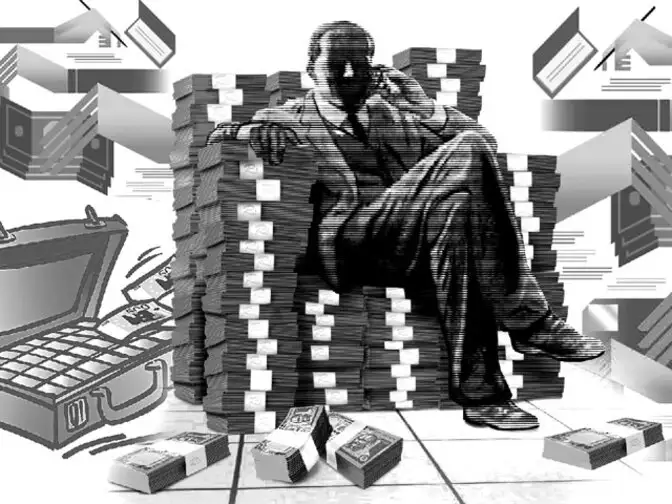
In 1990-91, according to various estimates, the black economy constituted about 35 per cent of the national economy, which was larger than either its primary or secondary sectors. Since then black income generation has increased not only through both legal (real estate transactions, the share market) and illegal (hawala, financial scams, gold smuggling) activities but also In 1990-91, according to various estimates, the black economy constituted about 35 per cent of the national economy, which was larger than either its primary or secondary sectors. Since then black income generation has increased not only through both legal (real estate transactions, the share market) and illegal (hawala, financial scams, gold smuggling) activities but also via instances of corruption. The New Economic Policies expected to counter its growth have been unsuccessful in containing it. In this empirically rich and finely argued book, Arun Kumar critically examines the standard explanations for the causes and consequences of black income generation and the methods suggested for curbing it. His incisive analysis lays bare the pernicious effects of black income on the macroeconomy and the resultant inefficiency, waste and sub-optimality in the economy and society.
It also spotlights the role of criminalization and the emerging nexus of the businessman, politician and bureaucrat in perpetuating the black economy. Showing the limited success of technical remedies like the VDIS, Arun Kumar argues in favour of structural remedial measures, which include empowering people through a right-to-information act. This revised edition has a foreword by ex-Prime Minister V.P. Singh and new appendices on employment and income in illegal activities in India and money laundering.
Anna Hazare's fast seeking the acceptance of the Jan Lokpal Bill, and the widespread mass protests in urban India that followed his arrest from home, have shaken the government. Political parties have woken up to the depth of feeling against corruption. Two factors have come together — the fight for the Jan Lokpal Bill and the violation of the citizen's civil right to protest. The snowballing protests are seen to be against corruption.
Obviously, the public are fed up with the day-to-day harassment they face. To put this in perspective, it is important to understand the benefits to society of tackling the huge black economy in India. Some people argue that the black economy also generates jobs and production. For instance, they argue that a lot of goods are bought in the market using black incomes, and that leads to increase in production and employment.
They argue that the black economy generates informal sector employment and helps the poor. Some go to the extent of arguing that India escaped the worst effects of the global recession in 2008, and the economy only slowed down, because a large amount of black money was floating around — which generated additional demand. Some justify bribes as “speed money” that enables work to be done faster.
There is some truth in all this. Yet, it can be shown that the ill-effects of the black economy far outweigh its beneficial effects.
Think of bribe as “speed money.” In order to extract a bribe, the bureaucracy first slows down work and harasses the public. If work was automatically done, why would anyone pay bribes? Thus, the system has to be made inefficient so that those who can afford to pay can get their work done quickly but the rest continue to suffer. The administration becomes rundown since rather than devising ways to work efficiently, it is busy thinking of ways to make money by setting up roadblocks to efficient functioning. This has spawned a culture of ‘middlemen' and personal approach to officers. Things hardly happen in the routine manner. The corrupt need the middleman to insulate themselves from direct public contact lest someone reports them.
The bribe-giver also, not knowing how much to bribe and how to contact the administrator in charge, finds it a convenient arrangement. Much of the black economy in India is like “digging holes and filling them.” That is, one digs a hole during the day and then another fills it up at night; the next day there is zero output but two salaries are paid.
This is “activity without productivity.” An example is of poorly made roads that get washed away or become pot-holed with every rain and need repeated repairs. Thus, instead of new roads coming up, much of the budget allocation is spent on maintenance. Teachers may not teach properly in class so that students have to go for tuitions. Not only families have to pay extra but the students find learning to be insipid and lose interest. This affects their creativity and future. Consider how millions of litigants, their families/friends, and lawyers arrive daily in the courts.
In most instances, the hearing in a particular case lasts just a few minutes. The next date, weeks or months away, is announced, and they go back home. Not only is justice delayed inordinately, but time is lost and expenses are incurred on lawyers' fees, travel, and so on. Cases that could be resolved in a few months go on for years, multiplying costs. The expense of delayed justice is both direct and indirect. Delay is often a result of the impact of the black economy.
Honest people who lose hope start resorting to other means, which dents the notion of social justice and weakens society. This cost cannot be calculated in monetary terms but it is significant. Because of the growing black economy, policies fail both at the macro-level and the micro-level. Planning or monetary policy or fiscal policies do not achieve the desired results because of the existence of a substantial black economy.
Targets for education, health, drinking water and so on are not achieved because “expenditures do not mean outcomes.” The economy does not lack resources but faces resource shortage. Much investment goes into wasteful and unproductive channels, like holding gold or real estate abroad. The flight of capital lowers the employment potential and the level of output in the economy.
Capital sent abroad does not generate output in India but does so where it goes. A country that is considered capital-short has been exporting capital. A nation that gives concessions to multinational corporations to bring in capital loses more capital than it gets, and that too at a high cost, from foreign institutional investments or foreign direct investment. India's policies are open to the dictates of international capital because the country's businessmen and politicians have taken capital out in large doses since Independence.
The costs are huge. The direct and indirect costs are of policy failures, unproductive investments, slower development, higher inequity, environmental destruction and a lower rate of growth of the economy than would have been possible. India could have been growing faster, by about 5 per cent, since the 1970s if it did not have the black economy.
Consequently, India could have been a $8-trillion economy, the second largest in the world. Per capita income could have been seven times larger; India would then have been a middle-income country and not one of the poorest. That has been a huge cost.
The black economy also leads to “the usual becoming the unusual and the unusual the usual.” That which should happen does not, and that which should not keeps happening. We should be getting 220 volts electricity but mostly get 170 volts or 270 volts. Samehadaku Naruto Vs Paint. Equipment burns out, so all expensive gadgets need voltage stabilizers.
This results in higher capital costs; maintenance costs rise. Water in taps should be potable, but it is of uneven quality because the pipes are not properly laid and sewage seeps in. Thus, people carry water bottles, use water-purifiers and boil water at great extra cost. Even then, people fall ill. Some 70 per cent of all disease in India is related to water, so we spend extra on hospitalisation and treatment.
Then there is the associated loss of productivity; the poor are particularly the victims. Hospitalisation can be traumatic because of the large-scale callousness there. Public hospitals are crowded and the doctors are overworked. Due to unhygienic conditions, patients can get secondary infection or attendants can fall sick. In private hospitals the patient is not sure whether unnecessary tests are being done and whether visits by consultants coming to see them are needed at all. Tamil Serial Actress Usha Hot more. Even after all this, cure is not assured: the drugs may be spurious, the intravenous fluid contaminated, and so on. The poor suffer from the presence of a large number of quacks in the market who give injections or steroids or an overdose of antibiotics.
It is by the sheer strength of the human constitution that in spite of these adversities, many people get cured. The result of all this is that costs everywhere are higher than they need to be — raising the rate of inflation. If capital is over-invoiced by businesses to make money, the cost of setting up industry is higher.
If poor quality grain is sold in the public distribution system, the price is higher. If children need tuitions because of poor teaching, the family's cost is higher, and so on. At the social level, the cost is a loss of faith in society and its functioning. Hence many now seek individual solutions and discount societal processes. At the political level there is fragmentation, with States demanding their own packages because the belief that the nation as a whole can deliver has been dented. The demand for smaller States is a corollary because the bigger States neglect the less vocal regions.
Each caste, community and region now wants to have its own party to represent its narrow interest, leading to the proliferation of smaller parties. Can the cost of this fragmentation and loss of national spirit be calculated? New movements for a strong Lokpal, the right to education, food and information, are likely to recreate a common national ethos that is so necessary, and which may generate the political will to tackle the hugely expensive black economy. The fight for one is the fight for the other also. (The author is with the Centre for Economic Studies and Planning, School of Social Sciences, Jawaharlal Nehru University, New Delhi. This article is based on his forthcoming book, Indian Economy since Independence: Tracing the Dynamics of Colonial Disruption in Society. E-mail: arunkumar1000@hotmail.com).